Tracing Incentive Sequences in Portable Live Gaming That Build Toward Collective Prize Pools
Written by Rafael Hoffmann · Nov 1, 2026

Tracing Incentive Sequences in Portable Live Gaming That Build Toward Collective Prize Pools
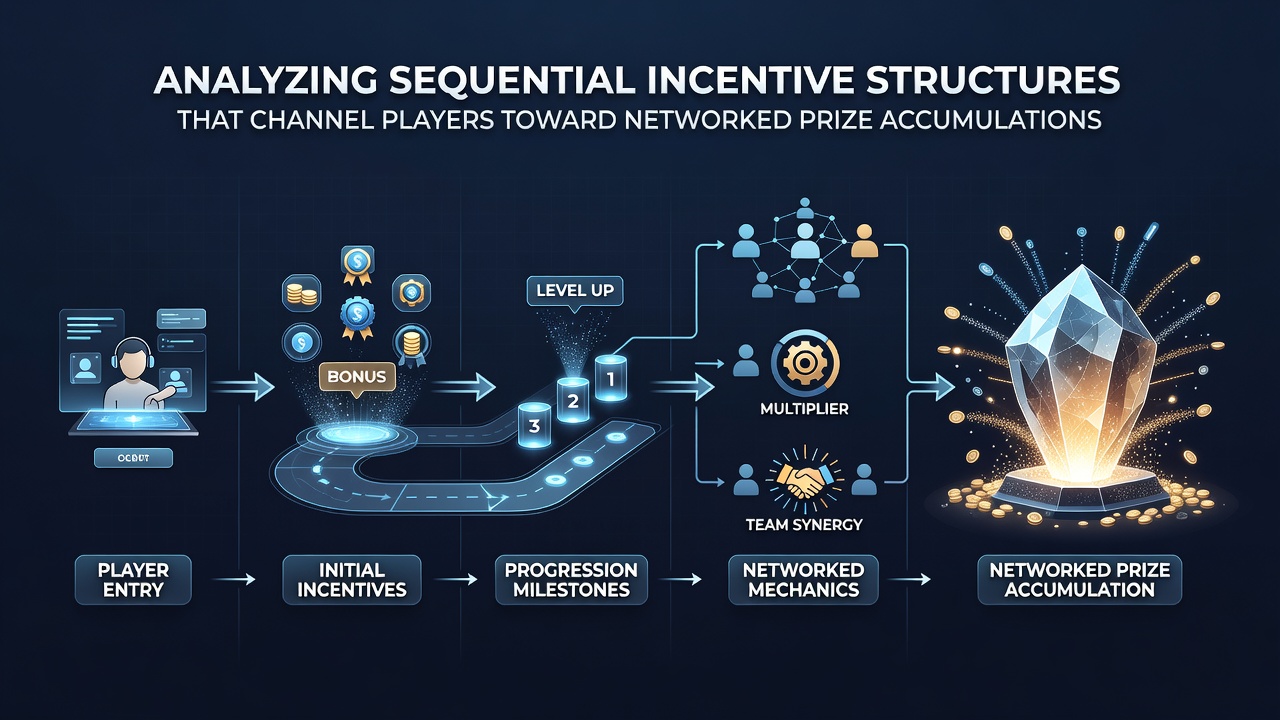
Sequential incentive structures in portable live gaming formats operate through carefully ordered reward tiers that guide participants from initial entry points toward shared prize networks, where accumulations grow across multiple users and sessions, according to industry data tracking mobile platform mechanics. These systems begin with small, immediate rewards such as login credits or basic free plays, then escalate based on continued activity that unlocks higher-value opportunities in live dealer environments connected to progressive pools.
Initial Reward Layers and Player Onboarding
Portable gaming applications deploy entry-level incentives including daily login bonuses and short task completions that introduce users to core mechanics while establishing patterns of repeated engagement, researchers have documented in platform behavior studies. These early stages often incorporate time-limited offers that expire within hours or days, prompting quicker returns and setting the foundation for deeper involvement in formats where live elements combine with accumulating jackpots across global player bases.
Data from mobile analytics firms reveals that completion rates for these starter sequences correlate with transitions into live sessions, where participants encounter networked prize structures that draw from collective contributions rather than isolated game outcomes. Observers note that the sequencing ensures players encounter progressively complex rules at each stage, maintaining momentum without abrupt shifts in expectations.
Escalation Through Tiered Challenges
Once initial onboarding concludes, systems introduce mid-level challenges such as streak multipliers or level-based unlocks that require sustained play across several days or weeks, channeling activity toward live gaming modules integrated with real-time prize pools. These intermediate incentives frequently bundle elements like bonus credits redeemable only in specific live formats, where networked accumulations update continuously based on aggregate wagers from distributed users.
Figures from regional gaming reports indicate that such layered challenges increase session frequency by aligning personal progress with communal reward growth, creating feedback loops where individual actions contribute visibly to larger prize totals displayed in app interfaces. This progression avoids isolated play by embedding social visibility features that highlight contributions from other participants in the same networked system.
Integration With Live Networked Formats
Advanced stages connect users directly to portable live gaming environments featuring dealer interactions and shared jackpot mechanics, where prior incentive sequences have prepared participants for higher-stakes participation funded by ongoing network contributions. These formats track prize growth in real time across mobile devices, with sequential rewards often including entry tickets or stake multipliers that apply specifically within the live networked sessions.
Industry analyses show that November 2026 projections from European market monitors highlight expanding adoption of these integrated sequences, as operators refine mobile architectures to sustain longer engagement cycles leading into collective prize events. The structures emphasize continuity, with achievements from earlier tiers carrying forward as advantages in the live phases, thereby reinforcing the pathway toward networked accumulations.
Monitoring and Adjustment Mechanisms
Platform operators employ data-driven adjustments to incentive sequences, monitoring completion metrics and dropout points to refine transitions between stages and maintain flow toward networked prize elements, according to operational reviews from international gaming associations. Such adjustments include recalibrating reward values or introducing variant challenges that align with peak activity periods in live formats.
Research from academic institutions tracking digital gaming behaviors demonstrates that these responsive sequences reduce friction in player progression, allowing smoother movement from solitary mobile tasks into interactive live environments where prize pools expand through collective input. Geographic variations appear in implementation, with North American platforms often emphasizing speed-based tiers while Asia-Pacific variants focus on social sharing elements within the same overall structure.
Conclusion
Sequential incentive structures in portable live gaming continue to evolve as operators map player pathways that reliably direct activity toward networked prize accumulations, supported by measurable patterns in engagement data and platform design. These systems rely on ordered reward delivery combined with live integration points that convert individual participation into shared outcomes across mobile formats. Evidence from multiple regulatory and research sources confirms the effectiveness of this channeling approach in sustaining long-term involvement without disrupting the core live gaming experience.